




Travel with a pet: What items you need to pack
Make pet travel easy and stress-free with these 8 essential items for your furry friend’s comfort and safety.
Problem Solved
- Traveling with pets can be rewarding, but requires careful planning and consideration for their safety and comfort.
- Never leave pets in a car in extreme temperatures, even for short periods, as it can be life-threatening.
- Research pet-friendly accommodations, transportation options and local regulations before traveling.
- Ensure pets have proper identification, necessary vaccinations and essential supplies for the journey.
- Consult a veterinarian for advice on medications, travel anxiety and airline regulations if flying with pets.
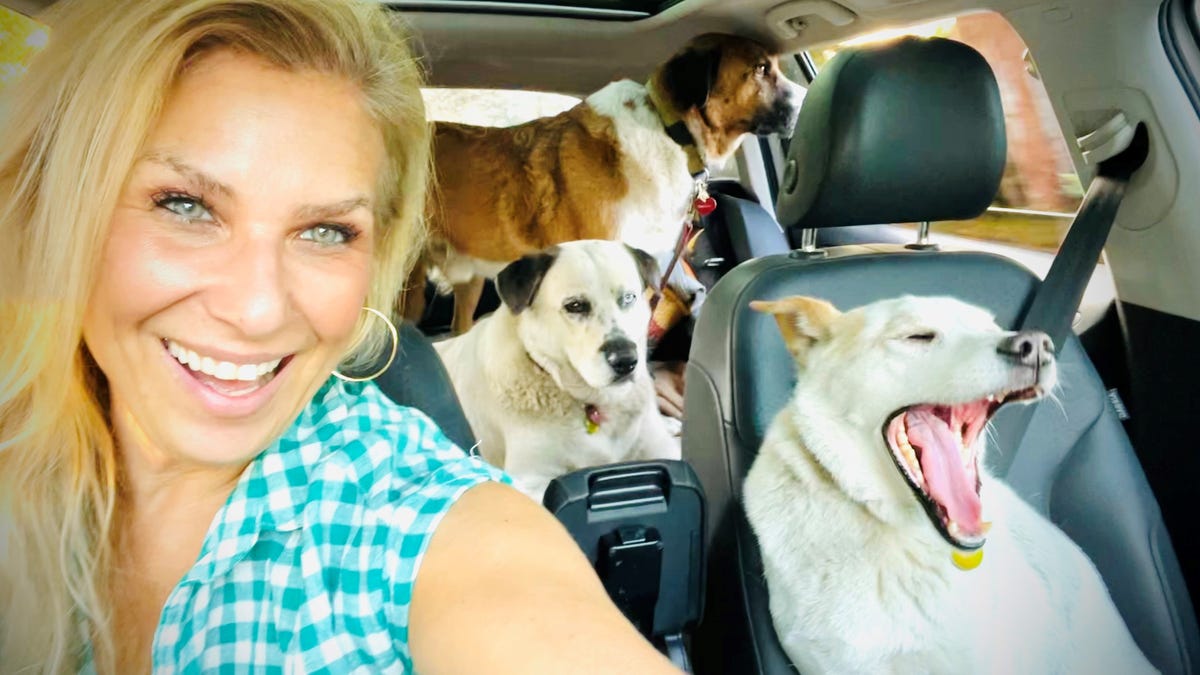
Lori Kalef never goes on vacation without her three dogs in tow. She often takes them with her around town as well.
But Kalef has a hard rule to not leave them in her car if the temperature might be too hot or too cold outside. That’s because it can quickly get too hot or too cold inside the car for the dogs and endanger their health.
Kalef, would know. As the director of programs for global animal rescue group SPCA International, Kalef is well-versed in the transportation of animals.
For example, about six years ago, SPCA International was part of an effort to bring dozens of dogs from Chernobyl in northern Ukraine to North America. The dogs are the descendants of the pets left behind in 1986, when an explosion of the city’s nuclear power plant forced an evacuation of more than 100,000 people, and they had to leave their pets behind.
More recently, in April 2024, SPCA International brought 70 dogs from the West Bank to the United States. As the Detroit Free Press reported, part of the USA TODAY Network, 10 of the dogs — which were caught up in fighting from the Israel-Hamas war — ended up in Michigan for adoption.
Kalef said traveling with a pet, if you can do it properly, is rewarding for both you and the animal.
“I never take a vacation without my dogs because they make everything better,” Kalef said. “So I want to give them the best life I can. Also, for pets, you’re their entire life. So when you take them with you, they’re living your life with you. Also, keeping your dogs and cats active is a great brain activity and keeps them healthy both mentally and physically.”
So here are the tips Kalef and others recommend if you want to travel with a pet.
When to leave a dog at home
Cory Keller, CEO of rescue group Friends for Animals of Metro Detroit, said each summer his organization gets inundated with calls from people reporting a dog was left in a vehicle and the caller is concerned that it is too hot in the car. But the caller doesn’t know what to do. The group advises the person to contact the local police department because the police will try to find the owner and if necessary, break the car window.
But to avoid being the person with a broken window, Keller advises to be intentional with your plans because even if you think you’re just running in a store for 10 minutes, if it’s 70 degrees outside, the interior of a car can heat up to 90 degrees in 10 minutes.
“So that’s extremely hot for your dog to be in there, even for 10 minutes,” Keller said. “And if you’re gone longer, that’s when the dog gets heat stroke. Or if someone sees the dog in the car and they call 911, then someone comes and breaks your window.”
If you think that leaving your car running with the air conditioning on is the solution, Keller said, no.
“I wouldn’t leave my dog alone in the vehicle when it’s running because the dog can get bored and get down to where the pedals are, chew on wires and so forth,” Keller said. “It’s just easier for the safety of the dog, to just leave my animal at home.”
That is unless you have a Tesla, said Brian Moody, executive editor of Autotrader. Moody said one thing Tesla absolute nailed was its “Dog Mode.”
“It’s a setting on the A/C,” Moody said. “So because the car is electric, the car can be locked and kept running and on the central touch screen a message says, ‘My driver will be back soon, don’t worry the A/C is on and it’s blank degrees.’ Whatever they set it to. That’s super smart. Anyone with an EV can do remote start, but the big differentiator is the message on that screen.”
Car brands that cater to dogs
If you know you’ll be doing a lot of driving with your canine companions, Moody said there are certain brands, besides Tesla, that offer ammenities that will make travel easier and safer for you and your pet.
Many brands sell seat belt harnesses to strap a dog to the seat to prevent him or her from flying forward if you stop fast. There are also seat belt extenders you can buy at most pet stores. One end snaps into the car’s seat belt receptor and the other end onto the animal’s harness or collar to help hold them in place when you stop.
Moody, who often travels with his dog, DJ, in the car, said it is key to make sure the dog is secure. Volvo offers a cage that is installed specifically to fit your Volvo and your dog versus using a generic crate in your cargo area, Moody said.
“It’s a really elegant solution where it can take up either half the cargo space or the whole cargo space and there’s a little door,” Moody said. “It’s an excellent solution” for what websites show costs less than $200.
Similarly, Subaru sells many pet accessories such as a weighted travel water bowl that has an anti-splash guard, Moody said. A driver can get small fans that plug into the rear cargo area, too, if that’s where your dog is traveling, to keep the animal comfortable.
“Subaru’s commitment to dogs is not just that they put dogs in commercials,” Moody said. “They even require their dealers to contribute to local pet shelters. They often have dog friendly spaces at their dealerships and branded chew toys. “
Many other automakers sell dog accessories, too. Nissan, for example, offers a dog ramp, he said.
“The reason that’s important is because the best cars for dogs are cars that are kind of low to the ground because when they jump down, it’s not that great for them especially over time. So Nissan has a ramp that can make getting into a small SUV easier for the dog to get in and out, especially as they age,” Moody said. “That costs $280 and it folds up so you can carry it with you.”
The rules of the road
Before deciding to take your pet anywhere, Keller said to ask yourself: Do I know how well my pet travels, even short distances? Do they need a sedative so that they are not stressed?
“I know my cat, Dave, she cries every time I put her in a carrier to go to the vet,” Keller said. “So long distances, I would talk to the vet of if I should have any medications to help her travel.”
Keller said being prepared is critical, and whatever your final destination is, know if there is a local veterinarian in the area in case you need it.
Kalef warned that some pets get queasy when they’re in a car or on a plane, so she recommends not feeding them an hour or so before travel.
If you do decide your pet travels well, now comes the preparation. Kalef said it is crucial to make sure the pets are up to date on vaccines.
The basics to bring:
- Snacks and food they are used to eating.
- Water, traveling water bowls or know places you can stop to get the animal water.
- For dogs, poop bags. For cats, kitty litter and a pan.
- A first-aid kit with gauze and bandages in case they get injured.
- Your vet’s contact information or a vet at your destination.
- Any medications they take.
- For dogs, an extra-long lead to give them freedom without letting them off leash.
- Collars with your identification and phone number. Get the animal microchipped with your contact information registered with it.
- For a cat, get a breakaway collar so that if the cat gets the collar snagged on something, it will pop off and not choke the cat.
- If you plan to go in a boat or near water, bring a fitted life vest for the animal.
- If you’re camping, pet proof the area to make sure there are no poisonous plants nearby and be aware of wildlife.
Finding a place to stay with your pet
Kalef said she sometimes struggles to find places that allow her to stay with three dogs because most hotels or Airbnbs that do allow pets, limit it to two.
There is a site called BringFido that lists pet-friendly hotels and Airbnbs, but she warns that a lot of places will advertise as pet friendly, but it is still a good idea to call and confirm.
“Some will say they advertised as pet friendly two years ago and no longer allow it,” Kalef said. “And, some will allow you to bring more than two pets. Also, most pet friendly hotels will allow dogs, but not cats. So that is also important to note.”
If you return to a place often, develop a relationship with the host of an Airbnb so they know you and what your dog is like, making it easier to rebook there in the future, Kalef said.
Kalef said most places will not let you leave your animal alone in a hotel or Airbnb, so be prepared for that because you also can’t leave them in a car if it’s too hot or cold outside. Kalef said you can look for pet sitters in the area. There is a site called Rover that provides pet sitters. If you do research ahead, Kalef said there are a lot of pet-friendly patios at restaurants where you can take your pet with you to dinner.
Finally, Kalef uses tracker collars for her dogs. Basically, it is a GPS device that she fits on her dogs’ collars that allows here to see on her phone where her dogs are in real time in case one of them wanders off. The trackers come in a variety of options and price points listed on www.chewy.com.
“There are limitations to it with cell reception,” Kalef said. “But 99% of the time, it’s been a lifesaving technology.”
Keller added one last suggestion: Make sure any pet collar has the owner’s name and phone number sewn on it or embroidered on it because a tag can fall off.
“I’d rather have everything tripled checked so that if something were to happen, my name’s everywhere on the animal,” Keller said.
Flying with Fido
Kalef said if you are going on a short trip that has to be taken by air, leave your pet at home because airline travel is stressful on an animal. The SPCA International does not recommend using sedation because of unknown side effects, she said.
If you have to fly to relocate or for some other reason, Kalef and Keller said there are airlines that will allow the pet to fly in the cabin with you for an extra fee. Kalef said some of pet-friendly airlines allow you to fly with your animal on board without a cage such as K9 Jets or Bark Air.
“If you do plan to fly with your pet, every airline has a different policy so it takes a lot of planning,” Kalef said.
For example, flying internationally requires you check that you’re not going to a Centers for Disease Control and Prevention high-risk rabies country, of which there are about 113. If you are, there are several rules to follow to get your dog in that country or back in the United States after visiting such a country, Kalef said. Meeting those rules could tack on an extra $750 to more than $1,000.
If you are flying domestically, get direct flights, know the airline’s policies and have an airline-approved crate for your pet. Keller noted that some airlines won’t allow dogs with short snouts such as French Bulldogs to fly at all because of the stress that could put on the dog’s ability to breathe.
If an airline does allow pets, it is always better for them to fly in the plane than in cargo. If they have to go in cargo, talk to your vet first, Keller said.
“Or people are always welcome to reach out to us because we do so much travel with animals,” Kalef said. “At answers@spcai.org, and we have quite a bit of traveling tips on our website as well.”
Jamie L. LaReau is the senior autos writer who covers Ford Motor Co. for the Detroit Free Press. Contact Jamie at jlareau@freepress.com. Follow her on Twitter @jlareauan. To sign up for our autos newsletter. Become a subscriber.
link