




NPS Photo / Wil Marischen
Avoid Delays
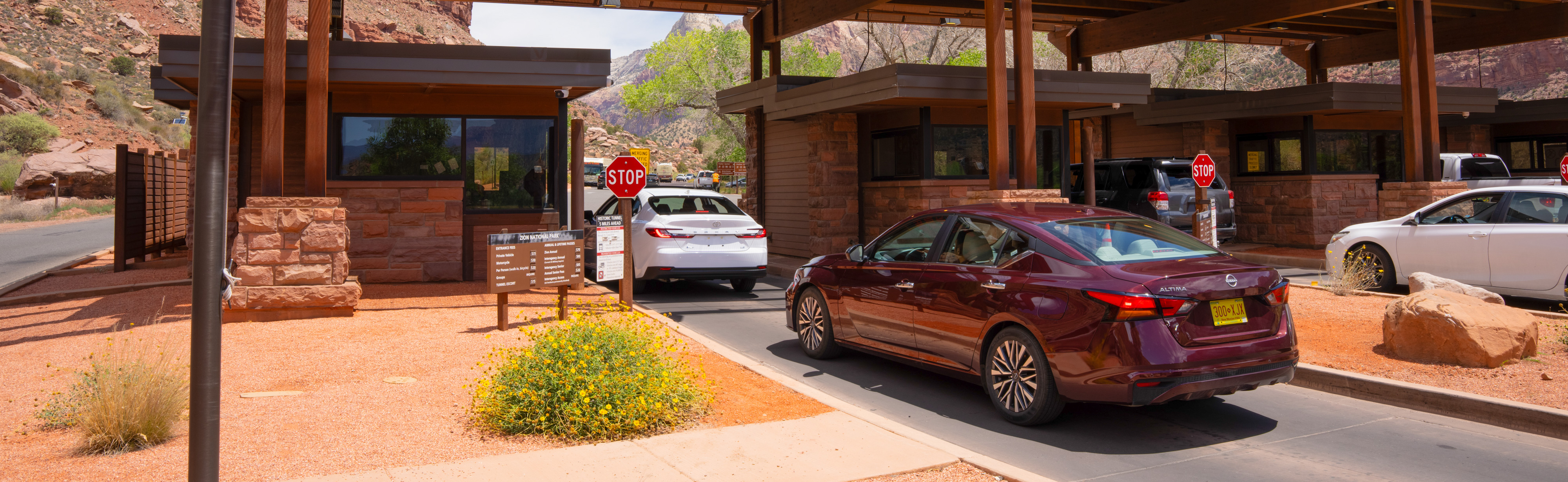
In 2021, Zion recorded more than 5 million visits. From early February through late November, Zion can be very busy. There may be a wait at park entrance stations, and parking often fills by early or mid-morning. Avoid delays using the following tips:
- Avoid traffic at park entrances: Park in Springdale and ride the free shuttle to the park.
- The Pedestrian Entrance can be a faster way to get into the park.
- Avoid long lines at the visitor center: Plan your trip ahead of time and download our current Information Guide.
- During the summer, lines regularly stretch to the doors.
- Avoid crowded times: Visit early in the morning or late in the evening, or plan your trip for a less busy date.
- The park is less busy on weekdays than weekends.
- December and January tend to be less busy (except around holidays).
Holiday Weekends Are Especially Busy
When you plan your trip, remember that Zion is a very popular place to visit on holidays. Some of the most popular weekends to come here include:
- Easter week (date varies – usually in April)
- Memorial Day Weekend (last Monday in May)
- Independence Day (July 4)
- Pioneer Day (July 24)
- Labor Day Weekend (first Monday in September)
On busy days, expect to see a lot of other people on trails and the park shuttle. It is not uncommon for hundreds of people to hike to Emerald Pools, Scout Lookout, or The Narrows each day.
Rangers Are Here to Help
If your plans fall through, or if you are not sure where to go, stop by a visitor center and ask one of the friendly rangers for recommendations! Park rangers will help you plan your visit, so you can get the most out of your Zion experience. Check our Hours of Operation to see when visitor centers are open.


NPS Photo
Ride the Zion Canyon Shuttle
The park established a seasonal shuttle system to reduce traffic and parking problems in Zion Canyon. Shuttles run daily during the busy season, typically from spring through fall.
During the shuttle season, personal vehicles are not allowed on Zion Canyon Scenic Drive (north of Canyon Junction). Visitors can park at Zion Canyon Visitor Center or the town of Springdale and ride the shuttle into the canyon.
Alternatives to the Shuttle
Visitors can walk or ride a bicycle up the canyon to avoid shuttles. Just remember that the road is usually extremely hot and sunny in summer, and trailheads are miles up-canyon. Also, bike riders must share the road and yield to busses.
When Shuttles Are Not Running
During non-shuttle season, when drivers are allowed on Zion Canyon Scenic Drive, the park is often still busy. Zion Canyon Scenic Drive will close for the day when there are no more legal parking spaces – often in December, January, and February. This is done to:
- Reduce illegal parking that can hurt plants and animals.
- Avoid gridlock that can slow medical responders, search and rescue team members, and law enforcement rangers responding to emergency calls.
For the best chance of finding parking, arrive early.

NPS Photo / Wil Marischen
Parking
Please park legally and responsibly in Zion National Park and the town of Springdale. Vehicles parked outside of designated spaces are subject to citation and/or towing:
- Park in designated areas only.
- Do not block the flow of traffic.
- Do not park on roads or vegetation.
- If a parking lot is full, do not wait for spots to open. Move on and try again later.
- Consider parking in Springdale and riding the shuttle instead.
Parking is free and available on a first-come, first-served basis. Visitors just have to pay the park entrance fee in order to reach the parking lot.
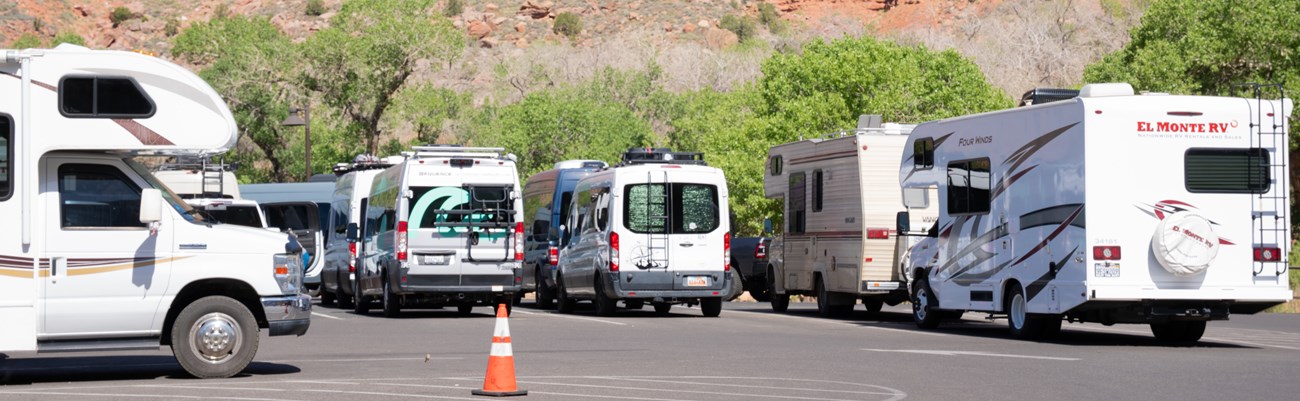
There are over 20 parking spaces for large vehicles (such as RVs, trucks with trailers, and buses). There are also 22 spaces for motorcycles. Normal size cars are not allowed to park in this location.
Parking is free and available on a first-come, first-served basis. Visitors just have to pay the park entrance fee in order to reach the parking lot.
Parking is free and available on a first-come, first-served basis. Visitors just have to pay the park entrance fee in order to reach the parking lot.
Parking is free and available on a first-come, first-served basis. Visitors just have to pay the park entrance fee in order to reach the parking lot.
Be aware that many of these spots are a long distance from shuttle stops or restrooms. Be prepared to walk to a shuttle stop in order to access the canyon. Parking is free and available on a first-come, first-served basis. Visitors just have to pay the park entrance fee.
SunTran is a bus service based in St. George. SunTran’s Zion Route connects St. George, Washington, Hurricane, La Verkin, Virgin, and Springdale, allowing visitors to park in any of those communities and ride to Zion National Park. Check the SunTran website for details.
Remember to park legally and responsibly in these communities. Parking regulations are strictly enforced, especially during the summer season. Be sure to follow all posted signs.
Parking in Other Locations
Kolob Canyons, Kolob Terrace Road, and the park’s east side offer designated parking at trailheads and points of interest. Kolob Canyons and the east side both have paved parking areas. Kolob Terrace Road typically has dirt or gravel lots for its trailheads. Parking is limited – make backup plans and arrive early if possible.


Directions
Zion National Park is located on State Route 9, near the town of Springdale, Utah.

Maps
View and download maps of Zion National Park.
link