China Urges Stronger Coordination Between Business, Finance Systems to Spur Consumption
China’s commerce ministry and financial regulators have urged local authorities to promote stronger coordination between business and financial systems to boost consumption, a joint statement showed on Sunday.
Local commerce departments are encouraged to tap existing funding channels for consumption-boosting campaigns and work with financial institutions to unlock spending potential, the Ministry of Commerce, People’s Bank of China and National Financial Regulatory Administration said in a joint statement.
Regions with resources are encouraged to use digital yuan smart-contract “red packets” to improve policy efficiency.
The trio also called for measures such as financing guarantees, interest subsidies and risk compensation to strengthen policy synergy and guide more credit into key consumption sectors.
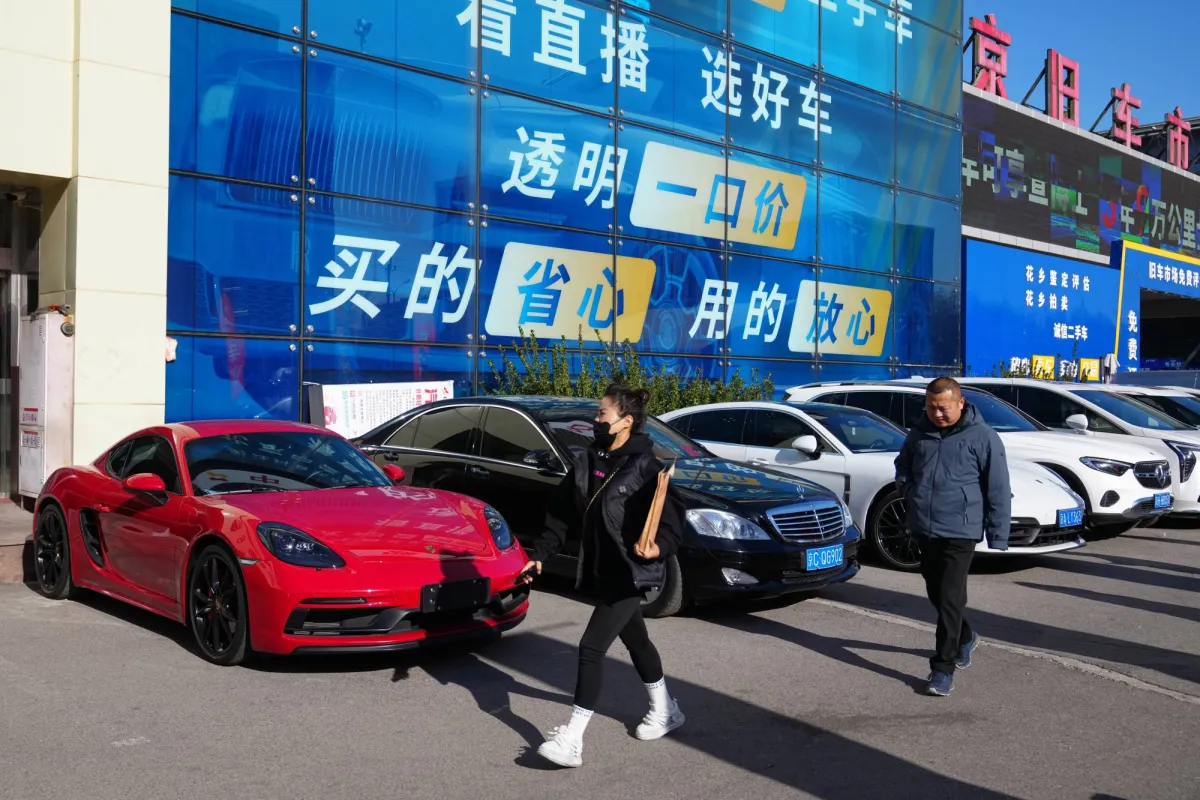
In other economic news, Chinese demand for foreign luxury cars is waning as customers opt for more affordable Chinese brand models, often sold at big discounts, catering to their taste for fancy electronics and comfort.
That is bad news for European carmakers like Porsche, Aston Martin, Mercedes-Benz and BMW that have long dominated the upper reaches of the world’s largest auto market.
A prolonged property downturn in China has left many consumers with little appetite for big purchases.
Meanwhile, the well-to-do are becoming increasingly shy about publicly displaying their wealth, said Paul Gong, UBS head of China Automotive Industry Research.
Many car buyers have been swayed by a 20,000 yuan ($2,830) trade-in subsidy offered by the Chinese government for purchasing electric and plug-in hybrid vehicles. People tended to purchase cheaper, entry-level cars where the discount will count more and those cars are mostly Chinese made, Gong said.
“Slowing economic growth is one key driver behind weaker demand for premium cars,” said Claire Yuan, director of corporate ratings for China autos at S&P Global Ratings, referring to a segment that typically counts car brands such as Mercedes-Benz and BMW.
The market share of premium car sales in China, usually priced above 300,000 yuan ($42,400), more than doubled between 2017 and 2023 to about 15% of total sales, S&P said.
That trend is now reversing. The share of premium cars sales fell to 14% in 2024 and to 13% in the first nine months of 2025, S&P said.
link